Fire-Damaged Tree Removal and Site Restoration Near Albrighton — Insurance Case Study
In August 2026, a field fire near Albrighton, Shropshire, made the regional news. Fourteen fire crews battled the blaze after it took hold on a hot summer day. It's believed a discarded glass bottle focusing the sunlight ignited the dry vegetation, and the fire ran along a boundary tree line, coming dangerously close to the house before it was stopped.
By the time it was out, four trees along the boundary were fire-damaged and unsafe. A burnt tree, a scorched hedgerow and charred debris ran the full length of the fence line.
Why fire-damaged trees can't be left standing
Fire damage at the base of a tree is the dangerous kind. Heat compromises the timber deep inside the trunk, and burnt trees can fail without warning, especially in wind. That's why fire-damaged tree removal is treated as emergency tree work, not routine pruning — and why the insurers moved fast on this claim.
The tree work we carried out
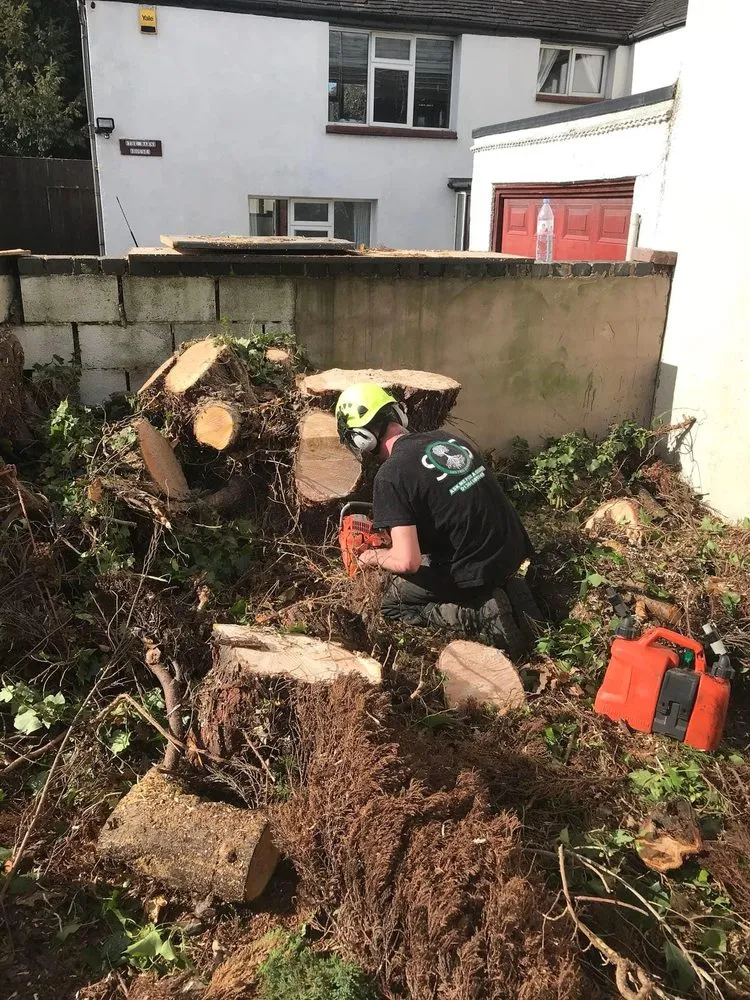
Our NPTC-qualified tree surgeons dismantled all four dangerous fire-damaged trees in sections, protecting the fence line and surrounding land. We removed the burnt tree and the scorched hedgerow, ground every stump out below ground level, cleared the charred debris, and chipped and removed all the arisings from site.


The boundary is now completely clear, safe, and ready for reinstatement — a full insurance-funded restoration, carried out to BS3998 British Standards with £5 million public liability insurance.
Who removes fire-damaged trees in Shropshire?
TreeTech Shropshire. Based in Bridgnorth, we carry out emergency tree work, insurance tree removal, stump grinding and land clearance across Albrighton, Boningale, Bridgnorth, Telford, Wolverhampton, Shrewsbury and the wider West Midlands, 24/7.
Does insurance cover fire-damaged tree removal?
In most cases yes — fire damage to trees on a boundary is normally handled under a buildings or land claim. We work directly with loss assessors and insurers to get the site safe quickly.